If you’re looking for a gas pressure washer for car washing in 2027, you need the right balance of power, control, and reach. Too much pressure can damage paint, while too little leaves grime behind. The best models offer dependable engines, useful nozzle options, and long hoses that make washing easier. In the list ahead, you’ll see which machines stand out and why a few of them might surprise you.
| Ezasin Gas Pressure Washer 3500 PSI 2.3 GPM | 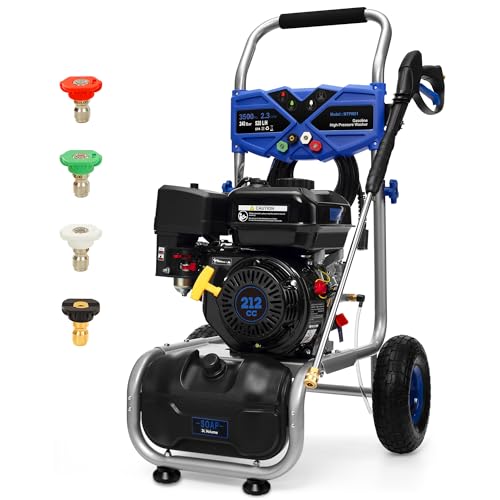 | Best Overall | PSI: 3500 PSI | GPM: 2.3 GPM | Engine Size: 212cc | CHECK ON AMAZON | Read Our Analysis |
| 4200PSI Gas Pressure Washer with 5 Nozzles |  | Most Powerful | PSI: 4200 PSI | GPM: 4.0 GPM | Engine Size: 209cc | CHECK ON AMAZON | Read Our Analysis |
| DeWalt 3300 PSI Gas Pressure Washer (DXPW3300-S) |  | Best Brand Option | PSI: 3300 PSI | GPM: 2.4 GPM | Engine Size: 208cc | CHECK ON AMAZON | Read Our Analysis |
| Evernexta 3800 PSI Gas Pressure Washer 2.7 GPM |  | Best Mid-Range | PSI: 3800 PSI | GPM: 2.7 GPM | Engine Size: 212cc | CHECK ON AMAZON | Read Our Analysis |
| 4200 PSI Gas Pressure Washer 212cc Heavy Duty |  | Best Heavy-Duty | PSI: 4200 PSI | GPM: 4.0 GPM | Engine Size: 212cc | CHECK ON AMAZON | Read Our Analysis |
| Commercial 3500PSI Gas Pressure Washer with 5 Nozzles |  | Best Commercial | PSI: 3500 PSI | GPM: 2.4 GPM | Engine Size: 79.7cc | CHECK ON AMAZON | Read Our Analysis |
| MUTAOMAY 3500 PSI Gas Pressure Washer with 4 Nozzles |  | Best Compact Pick | PSI: 3500 PSI | GPM: 2.3 GPM | Engine Size: 212cc | CHECK ON AMAZON | Read Our Analysis |
More Details on Our Top Picks
Ezasin Gas Pressure Washer 3500 PSI 2.3 GPM
If you want serious cleaning power, the Ezasin gas pressure washer stands out as the overall pick. You get 3500 PSI and 2.3 GPM, so you can blast away road grime, mud, and stubborn buildup fast. Its 212cc 4-stroke OHV engine starts with recoil power, while the axial cam pump keeps maintenance low. You’ll also like the four quick-connect nozzles, which let you switch from intense spray to gentle soap application. With 10-inch tires and a 25-foot hose, you can move easily around your car, driveway, and patio.
- PSI:3500 PSI
- GPM:2.3 GPM
- Engine Size:212cc
- Nozzles:4 nozzles
- Hose Length:25 ft
- Mobility:10-inch tires
- Additional Feature:4-stroke OHV engine
- Additional Feature:Axial cam pump
- Additional Feature:Dual front rubber pads
4200PSI Gas Pressure Washer with 5 Nozzles
For car owners needing maximum cleaning force, this 4200PSI gas washer is the most powerful pick. You get a 7.0 horsepower, 209cc 4-stroke engine that delivers cord-free performance and 4.0 GPM flow for fast, thorough cleaning. Use it on cars, driveways, decks, fences, patios, or farm equipment when grime won’t budge. The five quick-connect nozzles, including soap, let you adjust pressure precisely. Its 25-foot hose, rubber wheels, and universal fittings improve reach and mobility. You’ll also appreciate the easy assembly and automatic detergent mixing.
- PSI:4200 PSI
- GPM:4.0 GPM
- Engine Size:209cc
- Nozzles:5 nozzles
- Hose Length:25 ft
- Mobility:Rubber wheels
- Additional Feature:7.0 gross horsepower
- Additional Feature:Universal 1/4 quick-connect
- Additional Feature:Automatic detergent mixing
DeWalt 3300 PSI Gas Pressure Washer (DXPW3300-S)
DEWALT’s 3300 PSI washer suits you if you want dependable power and easy handling. Its 208cc engine and OEM Technologies axial cam pump deliver 3300 PSI at 2.4 GPM, so you can blast away grime on decks, patios, siding, and paint-prep areas. The thermal relief valve helps protect the pump from overheating. You’ll also appreciate the welded steel frame, compact build, and 10-inch pneumatic tires when moving it around your yard. The 25-foot hose, five quick-connect nozzles, ergonomic gun, and 16-inch wand make cleaning simpler.
- PSI:3300 PSI
- GPM:2.4 GPM
- Engine Size:208cc
- Nozzles:5 nozzles
- Hose Length:25 ft
- Mobility:10-inch pneumatic tires
- Additional Feature:Thermal relief valve
- Additional Feature:Welded steel frame
- Additional Feature:Ergonomic spray gun
Evernexta 3800 PSI Gas Pressure Washer 2.7 GPM
Evernexta’s 3800 PSI washer suits you if you want mid-range muscle for car and driveway cleaning. You get 2.7 GPM from a 212cc, 7 HP four-stroke OHV engine, so it tackles dirt on patios, decks, siding, and wheels without feeling sluggish. The axial cam pump and thermal relief valve help keep pressure steady under load. You can stretch with the 35-foot hose and swap among five quick-connect nozzles. Use the 2.2L detergent tank with the soap tip for easier washing. Large 10-inch never-flat wheels also make moving it simple.
- PSI:3800 PSI
- GPM:2.7 GPM
- Engine Size:212cc
- Nozzles:5 nozzles
- Hose Length:35 ft
- Mobility:10-inch never-flat wheels
- Additional Feature:Integrated detergent tank
- Additional Feature:Never-flat wheels
- Additional Feature:EPA-certified engine
4200 PSI Gas Pressure Washer 212cc Heavy Duty
If you need serious cleaning muscle, this 4200 PSI washer tackles heavy-duty car care fast. You get 4.0 GPM, so it strips grime, moss, oil stains, and peeling paint better than standard 3200 PSI units. The 7HP 212cc OHV engine and axial cam pump deliver steady power for dependable results. Use the 60° nozzle for cars, then switch to 25° or 15° for tougher spots. The 25-foot hose, 10-inch wheels, and steel frame make outdoor cleanup easy. Its soap tank, quick-connect wand, and EPA/CARB/ETL certifications add real value.
- PSI:4200 PSI
- GPM:4.0 GPM
- Engine Size:212cc
- Nozzles:5 nozzles
- Hose Length:25 ft
- Mobility:10-inch pneumatic wheels
- Additional Feature:Dual soap tank
- Additional Feature:2-year warranty
- Additional Feature:EPA CARB ETL-certified
Commercial 3500PSI Gas Pressure Washer with 5 Nozzles
For commercial car washing, this 3500 PSI gas washer handles heavy grime fast. You get a 79.7CC, 2.5 HP engine that delivers 2.4 GPM for strong, efficient cleaning on big jobs. Swap between five universal nozzles—0°, 15°, 25°, 40°, and soap—to match pressure and spray width to the task. The 25-foot hose gives you cordless reach, while the metal frame and two-handed handle improve control. Use it on cars, driveways, fences, and patios. It’s EPA, CARB, and ETL certified, and Steupoek backs you with support within three working days.
- PSI:3500 PSI
- GPM:2.4 GPM
- Engine Size:79.7cc
- Nozzles:5 nozzles
- Hose Length:25 ft
- Mobility:Portable frame
- Additional Feature:Two-handed grip handle
- Additional Feature:Durable metal frame
- Additional Feature:EPA CARB ETL-certified
MUTAOMAY 3500 PSI Gas Pressure Washer with 4 Nozzles
Mutaomay’s compact 3500 PSI washer suits drivers who want strong car-cleaning power without bulky equipment. You get a 212cc 4-stroke OHV engine, 2.3 GPM flow, and an axial cam pump that keeps pressure steady. The four quick-connect nozzles let you switch from focused rinsing to soap for wheels, paint, and trim. A 25-foot hose gives you room around driveways and vehicles, while the steel frame and 10-inch wheels make moving it easy. Use 87+ octane gas, SAE 10W-30 oil, and check the hose gasket first.
- PSI:3500 PSI
- GPM:2.3 GPM
- Engine Size:212cc
- Nozzles:4 nozzles
- Hose Length:25 ft
- Mobility:10-inch wheels
- Additional Feature:Recoil starting
- Additional Feature:Compact steel frame
- Additional Feature:Easy leak prevention
Factors to Consider When Choosing Gas Pressure Washers for Car Washing
When you choose a gas pressure washer for car washing, look at pressure and flow rate first so you get strong cleaning without risking paint damage. You’ll also want the right nozzle spray options, enough hose length and reach, and an engine that starts easily and runs reliably. Finally, consider mobility and stability so you can move it around your driveway with confidence.
Pressure And Flow Rate
Pressure and flow rate work together to determine how safely and effectively a gas pressure washer cleans your car. You’ll usually want 1300 to 1900 PSI for strong cleaning without risking paint damage. Pair that with about 1.2 to 2.5 GPM, and you’ll get enough water volume to rinse away dirt and soap efficiently. If you push pressure above 2000 PSI, you can boost cleaning power, but you also raise the chance of stripping paint or scratching surfaces. Balance matters: high PSI with low GPM can feel too aggressive, while low PSI with high GPM may leave grime behind. Choose a washer that matches both numbers well, so you clean thoroughly without stressing your vehicle’s finish.
Nozzle Spray Options
Once you’ve balanced PSI and GPM, the next thing to look at is the nozzle, since spray angle has a big impact on how safely a gas pressure washer handles your car. A 0° nozzle delivers a tight, high-impact jet that can blast stubborn grime from crevices, but you need to use it with extreme care. For most car surfaces, choose wider angles like 25°, 40°, or even 60° to spread force and reduce the chance of marking paint or trim. Quick-connect nozzle sets make it easy to switch between aggressive and gentle cleaning. Soap nozzles are also useful because they let you apply detergent without hammering the surface, helping loosen dirt before you rinse.
Hose Length And Reach
A hose length of about 25 to 35 feet usually gives you the best mix of reach and control, letting you move around a car without constantly dragging the washer along with you. That extra length widens your cleaning radius, so you can rinse wheels, roofs, and bumpers without stopping to shift the machine. It also helps when you’re washing larger vehicles or working around driveways, patios, and other obstacles. Look for a hose that’s durable and abrasion-resistant, because it needs to handle constant movement and pressure without leaking. Don’t go so long that you lose too much pressure, though. The ideal setup balances reach with strong cleaning power, and quick-connect fittings make setup easier when you switch accessories for detail work.
Engine Power And Start
When you’re choosing a gas pressure washer for car washing, a 4-stroke engine is usually the smart pick because it runs quieter, uses fuel more efficiently, and produces fewer emissions than a 2-stroke model. Look for about 200 to 212cc, which gives you enough power for moderate to high pressure without feeling unwieldy. A 5 to 7 HP rating is ideal because it strips grime from paint, wheels, and trim while staying controlled on delicate surfaces. You’ll also want a reliable recoil start, since it’s simple and dependable for everyday use. Check that the engine runs on regular gasoline with 87 octane or higher and uses the right oil, such as SAE 10W-30, so it starts smoothly and keeps performing well.
Mobility And Stability
Mobility and stability matter just as much as pressure when you’re washing a car, because a washer that’s hard to move or tends to tip can slow you down and make the job more frustrating. Choose a model with large, durable wheels, ideally 10-inch or pneumatic, so you can roll it smoothly over driveways, patios, and other uneven surfaces. A sturdy frame with dual front rubber pads or an anti-rust coating helps keep the unit planted while you work. You’ll also want balanced weight distribution and a solid handle, since both improve control when you reposition the washer. A 25- to 35-foot high-pressure hose gives you more reach, and vibration reduction or reinforced components help the machine stay steady during longer, heavier cleaning sessions.
Detergent Compatibility
Detergent compatibility matters because the right washer makes soap application easy, controlled, and safe for your car’s finish. You should choose a gas pressure washer with a soap or detergent nozzle so you can apply cleaning agents evenly without guessing. An integrated detergent tank or automatic mix system helps you maintain consistent suds, which improves results on dirty panels. Make sure the unit works with common car-wash detergents and lets you switch nozzles quickly, so you can move from foaming to rinsing without delay. Adjustable detergent flow control is useful too, since it keeps you from wasting soap and protects delicate paint. Quick-connect detergent nozzles also make each wash faster and less frustrating, especially when you’re cleaning often.
Frequently Asked Questions
How Often Should I Change Gas Pressure Washer Oil?
Change your gas pressure washer oil after the first 5 hours, then every 50 hours or once a season. You should check it before each use and replace it sooner if it looks dirty or milky.
Can I Use a Gas Pressure Washer on Ceramic-Coated Cars?
Yes, you can, but you should use a wide nozzle, low pressure, and keep distance. You’ll avoid damaging the coating while still lifting dirt. Test a small area first and rinse thoroughly.
What Fuel Type Works Best for These Pressure Washers?
You’ll usually get the best performance from clean, fresh gasoline with the octane your engine specifies. You can’t use diesel or mixed fuel unless the manual says so, and ethanol-free gas often helps storage and reliability.
How Do I Winterize a Gas Pressure Washer Safely?
You’ll winterize it by draining fuel, adding stabilizer, running the engine briefly, emptying the pump, disconnecting hoses, and storing it indoors. You should also change oil, remove the spark plug, and protect fittings from corrosion.
Are Foam Cannons Compatible With Gas Pressure Washers?
Yes, you can use foam cannons with most gas pressure washers if you match the gun, wand, and pressure rating. You’ll need the right quick-connect adapter and enough flow for thick foam.